How Long it Takes for a Baby Tooth to Emerge!
If you’re watching your baby’s gums like a hawk, it’s completely normal to wonder how long does it take a tooth to come in—especially when drooling and fussiness start before you can see anything. The good news: the “mystery” usually follows a pretty predictable pattern, and knowing what to expect can help you soothe sore gums and know when to call a pediatric dentist.
Quick Answer: How Long Does It Take a Tooth to Come In?
Typical timeline once a tooth starts breaking through
Once a baby tooth is ready to erupt, it typically doesn’t appear all at once. Many parents notice early changes for a few days before a small white bump becomes visible, then the tooth gradually works its way through the gum tissue.
In most cases, the period from first visible signs to the tooth clearing the gumline is roughly about a week total. That “about a week” idea is often described as an ~8-day window: a few days before you see the tooth, plus a few days after it first breaks through.
- Days before visible eruption: gums may feel tender, and drooling or irritability may increase even if no tooth is seen.
- Visible eruption: a small red/swollen area or “white bud” may appear.
- After it clears the gumline: the tooth may still look like it’s “finishing coming in” for several more days.
“Breaks through” generally means the tooth tip has reached the surface of the gum and you can see at least part of it. “Clears the gumline” means more of the tooth is visible and the gum tissue has moved away from the erupting area.
How long does it take for a baby tooth to fully emerge once it breaks through?
Even after the tooth tip shows, how long does it take a tooth to come in can vary depending on what “fully emerge” means. For many parents, “fully emerged” means the tooth is clearly visible and no longer looks like a tiny bump—this often takes a couple of days after the initial breakthrough for front teeth.
For other teeth, especially larger molars, the timeline can be longer. Studies and clinical experience suggest that eruption can continue gradually for weeks, because more tooth surface must travel through the gum tissue before it looks “complete” in the smile.
Variability is normal and expected. Differences in tooth position, gum thickness, and how far the tooth has already developed under the gumline can make one child’s eruption look faster while another child’s looks slower—even when both are within a healthy range.
- Incisors (front teeth): often appear relatively quickly once the tip breaks through.
- Molars (back teeth): may take longer to look fully visible and can be more uncomfortable.
- Canines: can also take longer than incisors because of their eruption path and size.
When teething symptoms usually peak vs when the tooth appears
Teething symptoms often start before the tooth is visible. Your baby’s gums can become tender as the tooth moves upward and presses against tissue, so drooling, chewing, and fussiness may peak days before you see the “white bud.”
Many parents notice that discomfort is strongest around the time the tooth is actively pushing through the gumline. That’s why the timing can feel confusing: symptoms may be at their worst before the tooth looks like it has arrived.
As the tooth clears the gumline, symptoms typically ease over the next several days. This is part of the reason the “about a week” or ~8-day window is so common—teething discomfort often follows the eruption process rather than waiting for the tooth to be fully visible.
- Early days: increased drooling, gum rubbing, mild sleep disruption.
- Peak days: swollen/tender gums, more irritability, more chewing/gnawing.
- After breakthrough: symptoms usually improve as the gum tissue settles.
What “Tooth Coming In” Actually Means (Tooth Eruption Basics)
The stages: tooth bud → eruption → full emergence
To understand eruption timelines, it helps to know that baby teeth are forming long before they ever appear in the mouth. Teeth begin developing while a child is still in the womb, and then they erupt later through the gums.
Dental professionals often describe eruption in stages. The eruption day is when the tooth breaks through the gum tissue and becomes visible, while full emergence means the tooth is more completely visible and the gumline has moved past the erupting area.
Between those two points, the tooth may be partially visible, and the gum may look red or swollen. That’s why “I saw a bump” and “the tooth is fully in” can be separated by several days depending on the tooth type.
Why timelines differ from baby to baby
Two babies can be the same age and still have different eruption timelines. Genetics play a major role in when teeth develop and how quickly they move through the gum tissue.
Tooth position also matters. If a tooth is angled slightly differently or sits deeper in the jaw, it may take longer to reach the surface—even if it’s otherwise healthy.
Finally, individual development affects how the gums respond. Some babies have thicker gum tissue or more pronounced swelling during eruption, which can make the process feel longer even when the tooth is progressing normally.
- Genetics: family patterns can influence eruption timing.
- Tooth position: depth and angle can change how long it takes to surface.
- Gum response: swelling and tenderness can vary widely.
Baby Teeth Eruption Timeline: When Do Babies Start Teething?
Average age to start teething (and early/late ranges)
Most babies begin teething around 6 months on average. However, it’s normal for teething to start earlier or later depending on the child.
Early teething can begin as soon as about 3 months, while later teething may not be noticeable until close to 12 months. Some babies have minimal symptoms and may not show obvious signs until the first tooth becomes visible.
It’s also important to remember that teething symptoms can start before the tooth appears. That means a baby who seems uncomfortable at 4–5 months may still be in the early stages of eruption even if the tooth isn’t visible yet.
First teeth to come in (which tooth erupts first)
The first teeth to erupt are usually the central incisors, the two front teeth in the middle of the mouth. In many children, the lower central incisors arrive first, followed by the upper central incisors.
Typical timing often looks like this: lower central incisors may erupt around 6–10 months, while upper central incisors often appear around 8–12 months. Individual variation is common, and paired eruption patterns are typical.
Teeth often come in symmetrically, meaning the left and right teeth in the same category (like the two bottom front teeth) tend to erupt around similar times. This doesn’t mean it will be perfectly identical, but it’s a helpful “normal” expectation.
When to check with a dentist if no teeth appear
Most babies will have at least one tooth by their first birthday, but the timing can vary. If there are no signs of eruption by later infancy, dental professionals may recommend checking in to rule out other issues.
A common guideline is to consult a pediatric dentist if no teeth appear by about 15 months. Some guidance also suggests checking by 18 months if eruption is still not underway.
That doesn’t automatically mean something is wrong. It simply ensures that dental development is on track and that feeding, oral habits, and overall growth are being monitored appropriately.
- Consider a dental check: if no teeth by ~15 months.
- Or check sooner: if there are other concerns like delayed growth or feeding difficulties.
- Ask your pediatrician: if you’re unsure whether teething symptoms are present.
Baby Tooth Eruption Chart (Order + Typical Ages)
Primary tooth order by type (incisors → molars → canines → second molars)
While every child’s timeline is unique, the order of primary tooth eruption is fairly consistent. In general, eruption begins with incisors (front teeth), then progresses to molars and canines, and finally to second molars.
Many eruption charts list the teeth in a sequence that helps parents predict what might come next. Central incisors typically lead, followed by lateral incisors, then first molars, canines, and second molars.
Because the mouth erupts in pairs, you may see left/right similarities within each tooth type. That paired pattern can help you recognize whether eruption is following a typical path.
- Central incisors
- Lateral incisors
- First molars
- Canines
- Second molars
Age ranges by tooth type (top vs bottom)
Below are commonly cited age ranges for primary tooth eruption. These are guidelines, not guarantees—some babies erupt earlier or later, and that can still be normal.
Front teeth often appear first, while molars and canines tend to come later. Second molars are usually the last primary teeth to erupt, often around the toddler years.
| Tooth type | Top teeth (typical range) | Bottom teeth (typical range) |
|---|---|---|
| Central incisors | ~8–12 months | ~6–10 months |
| Lateral incisors | ~9–13 months | ~10–16 months |
| First molars | ~13–19 months | ~14–18 months |
| Canines | ~16–22 months | ~17–23 months |
| Second molars | ~25–33 months | ~23–31 months |
Symmetry and what “normal” looks like
Teeth often erupt in pairs, which means the left and right teeth in the same category tend to appear around similar times. For example, the two bottom central incisors may erupt close together, even if one tooth shows a day or two earlier.
Minor deviations are common. Some babies may have a slightly longer gap between left and right eruption, or top teeth may lag behind bottom teeth by a few months.
What matters most is that eruption is progressing overall and that there are no major delays. If eruption seems stalled or there are other concerns, a pediatric dentist can help evaluate the pattern and provide reassurance.
- Expected: left/right similarity within a tooth type.
- Common: a few weeks of difference between paired teeth.
- Worth checking: if eruption is not progressing by the later infancy/toddler milestones.
How Long Does Teething Last (Symptoms Timeline vs Total Teething Process)?
How long teething symptoms last for a single tooth
For a single tooth, symptoms usually last about a week in total. That typically includes a few days before the tooth becomes visible and a few days after it breaks through and the gumline settles.
During that time, babies may chew more, drool more, and seem more irritable than usual. Sleep disruption can also occur, especially when babies are uncomfortable lying down.
Because multiple teeth can erupt close together, it may feel like symptoms never fully stop. In reality, the discomfort may be overlapping between teeth rather than lasting continuously for one tooth.
- Typical duration per tooth: ~7 days (a few days before + a few days after eruption).
- Front teeth: often shorter or milder discomfort.
- Molars: may cause longer or more intense symptoms.
How long the overall teething phase lasts
Teething is not a one-week event—it’s a process that spans months and can extend into toddler years. Many children experience active teething from infancy through early childhood as different teeth erupt.
Clinically, it’s common to see active eruption from around the first tooth (often near 6 months) through roughly 2–3 years as the full set of primary teeth completes. That means parents may notice cycles of drooling and gum discomfort across multiple months.
It’s also normal for some babies to have minimal symptoms for certain teeth. Others may be more sensitive during molar eruption, which can make teething feel more intense during those periods.
- Active teething window: roughly infancy into toddler years (~4–6 months to ~2–3 years).
- Overlapping eruptions: can make symptoms seem longer.
- Individual variation: some babies have fewer symptoms overall.
When the full set of primary teeth is usually complete
Most children have their full set of 20 primary teeth by about 3 years. Some children may finish a bit earlier, while others may take longer—especially for the last molars.
Because second molars are among the final teeth to erupt, the end of teething can extend into the toddler years. If a child’s eruption is delayed but still progressing, that may still be within normal variation.
If there is no progress by later milestones, dental professionals may recommend an evaluation. That can include checking eruption patterns, oral health, and overall development.
- Common milestone: ~20 primary teeth by ~3 years.
- Possible variation: some children finish closer to 3.5 years.
- When to seek help: if eruption seems stalled or significantly delayed.
Signs and Symptoms: How to Know a Tooth Is Coming In
Common teething indicators
Teething symptoms can vary from baby to baby. Some infants show obvious discomfort, while others have mild or even minimal symptoms.
Common signs include increased drooling, swollen or tender gums, and a strong desire to chew or gnaw. Many babies also become more irritable and may have sleep disruption, especially during active eruption.
Feeding can change temporarily too. Some babies may eat less because chewing feels uncomfortable, while others may want to nurse or bottle more often for comfort.
- Drooling and possible drool rash on the chin/chest
- Swollen/tender gums near an erupting tooth
- Chewing/gnawing on toys or fingers
- Irritability and fussiness
- Sleep disruption
What you might see in the mouth
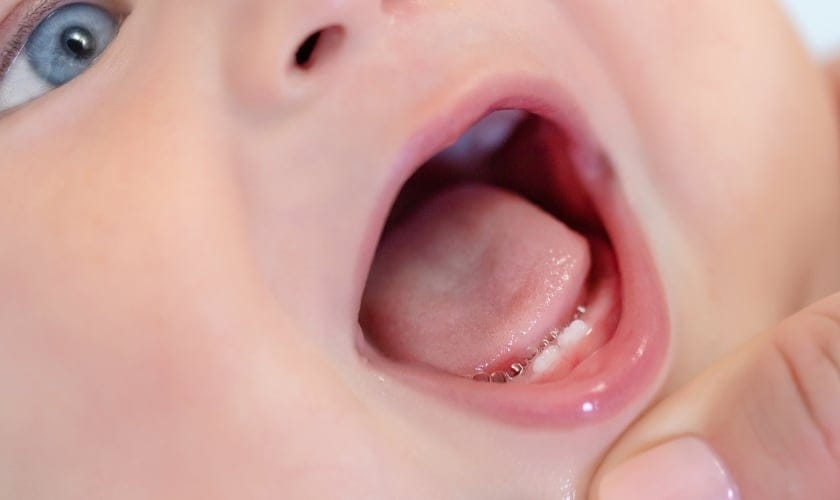
When a tooth is close to the surface, you may notice a small red or swollen bump on the gum. Sometimes a “white bud” appears, which is the tooth tip becoming visible through the gum tissue.
As eruption continues, the gumline may look slightly different around the area. You might also see the tooth tip gradually becoming more prominent over several days.
It can be helpful to observe patterns rather than expecting instant results. If a bump appears and then slowly changes shape over a week, that often matches normal eruption timing.
- Red/swollen gum area where the tooth is erupting
- Small white spot or “white bud”
- Gradual increase in visible tooth over days
Teething vs illness—what’s normal and what isn’t
One of the most important misconceptions is that teething causes true high fever, diarrhea, or repeated vomiting. Dental professionals generally agree that teething may cause mild temperature changes, but significant illness symptoms usually point to something else.
For many babies, teething can cause mild temperature elevation and increased drooling, but it should not cause severe systemic illness. If a baby has a fever of 100.4°F (38°C) or higher, especially if it persists, it’s best to contact a pediatrician.
Similarly, persistent vomiting, diarrhea, or signs of dehydration (like fewer wet diapers) should be evaluated promptly. When in doubt, a clinician can help determine whether symptoms match eruption or suggest infection.
- More consistent with teething: drooling, gum swelling, mild irritability
- Call a clinician: fever >100.4°F, persistent vomiting/diarrhea, severe lethargy
- Dehydration signs: fewer wet diapers, dry mouth, no tears when crying
Safe Relief for Sore Gums (What to Do While Waiting for the Tooth)
Non-medicine comfort measures
Comfort measures can make a big difference while you wait for the tooth to come in. A gentle gum massage with a clean finger can help soothe pressure and tenderness.
Chilled (not frozen) teething rings are another common option. Cool temperatures can numb discomfort slightly, but freezing can sometimes be too harsh for delicate gums.
Some babies benefit from cool, soft foods if they’re old enough for solids. Always supervise closely to reduce choking risk.
- Gentle massage: clean finger, light pressure on the gum
- Chilled teething ring: cool to the touch, not frozen
- Cool soft foods: yogurt, applesauce, or other age-appropriate options
- Extra hygiene: wipe drool to prevent rash
Oral care during eruption
Oral hygiene should begin as soon as the first tooth appears. Even before many teeth are visible, bacteria can accumulate, and gentle cleaning helps keep gums and emerging teeth healthy.
Use a soft-bristled baby toothbrush and brush gently twice daily. For fluoride toothpaste, dental professionals typically recommend an age-appropriate amount—often a smear for very young children and a rice-grain sized amount as they grow.
Brushing can also feel soothing for some babies. The key is to keep it gentle and consistent, so the mouth stays comfortable and clean during eruption.
- Brush twice daily with a soft baby toothbrush
- Use age-appropriate fluoride amount (ask your dentist for guidance)
- Gentle gum massage during brushing can reduce tenderness
When medication might be considered
Sometimes, comfort measures aren’t enough—especially during molar eruption. Over-the-counter pain relief may be considered, but dosing and suitability depend on your child’s age and health history.
It’s best to consult your pediatrician or dentist before using any medication. If medication is recommended, follow the exact dosing instructions provided by the clinician or the product label.
Safety matters: avoid unsafe products, don’t exceed recommended doses, and never use numbing gels that aren’t specifically approved for infants. If there’s any concern about breathing, severe sleepiness, or unusual reactions, seek medical advice.
- Ask first: pediatrician/dentist for OTC pain relief guidance
- Follow dosing exactly: based on weight/age recommendations
- Avoid unsafe products: use only clinician-approved options
Teething Myths, Red Flags, and When to Call a Pediatric Dentist
Myths to stop believing
Myth #1: “Teething causes high fever and diarrhea.” In most cases, teething does not cause true high fever or significant gastrointestinal illness. Mild temperature changes can happen, but persistent GI symptoms are more likely from a virus or other condition.
Myth #2: “Teething always causes symptoms.” Some babies sail through teething with minimal discomfort. Others may be more sensitive, but symptoms are not guaranteed for every tooth.
Myth #3: “If you don’t see a tooth, teething can’t be happening.” Teeth can be moving under the gumline for days before you see the first white bud. That’s why symptoms may appear before visible eruption.
- Teething ≠ high fever in most cases
- Teething symptoms vary widely
- Symptoms can precede visibility by days
Red flags that suggest something else is going on
Teething can be uncomfortable, but it shouldn’t cause severe illness. Red flags include high fever, persistent vomiting or diarrhea, and signs of dehydration such as fewer wet diapers.
Severe lethargy or a baby who is difficult to wake or unusually unresponsive should be evaluated urgently. These symptoms are not typical of normal tooth eruption.
Also consider calling if pain seems extreme or if symptoms last far longer than the expected eruption window for a single tooth. While overlapping eruptions can extend discomfort, severe or worsening symptoms deserve attention.
- Fever >100.4°F (38°C) or fever that persists
- Persistent vomiting/diarrhea
- Severe lethargy or dehydration signs
- Symptoms that worsen instead of gradually improving
Dental visit timing and what to expect
Many dental professionals recommend the first dental visit around age 1 or when the first tooth appears, whichever comes first. Early visits help establish a baseline and allow the dentist to check eruption patterns.
During the visit, a pediatric dentist typically looks at oral health, gum tissue, and how teeth are developing. For babies in the middle of eruption, the dentist may also provide tailored guidance on brushing, fluoride use, and comfort strategies.
If eruption seems delayed, the dentist can discuss whether it’s within normal variation or whether additional evaluation is needed. Most of the time, reassurance and a plan are all that’s required.
- First visit: around age 1 or when first tooth appears
- What they check: eruption patterns, oral hygiene, gum health
- What you’ll get: personalized tips for teething and prevention
Prevention: How to Support Healthy Eruption and Oral Health
Brushing routine and fluoride toothpaste guidance
Prevention starts early. As soon as the first tooth erupts, brush twice daily with a soft-bristled baby toothbrush. This helps remove plaque and supports healthy gums during eruption.
Fluoride is important for cavity prevention, but the amount should match age and ability to spit. Many guidelines recommend a smear amount for very young children and a rice-grain sized amount as they grow—your dentist can confirm the best amount for your child.
Consistency matters more than intensity. Gentle brushing twice daily is more effective and more comfortable for babies than aggressive scrubbing.
- Start brushing: at first tooth
- Brush twice daily
- Use age-appropriate fluoride amount (ask your dentist)
Feeding and bedtime habits during teething
Teething can change feeding patterns, and drooling can make bedtime routines feel harder. However, avoiding prolonged sugary exposure remains important for protecting enamel as teeth erupt.
Frequent snacking or sweet drinks—especially overnight—can increase cavity risk. If comfort feeding is needed, dental professionals often recommend keeping it limited and maintaining good oral hygiene afterward.
Drool rash is common during heavy teething. Wiping the chin and chest gently and keeping the skin dry can help reduce irritation and discomfort.
- Avoid sugary bedtime habits
- Manage drool rash with gentle wiping and barrier protection if advised
- Keep oral care consistent even during teething
Long-term outlook: primary teeth set up permanent teeth
Baby teeth are not “temporary placeholders.” They play a key role in speech development, chewing, and guiding permanent teeth into the right positions.
Healthy primary teeth also help your child maintain comfortable eating habits. When baby teeth erupt and remain healthy, it supports proper oral function and can reduce complications later.
By building good brushing routines and scheduling early dental visits, families can set up a strong foundation for long-term oral health. Our team at Smile Avenue Family Dentistry often emphasizes that early prevention pays off—especially during the eruption years.
Comparison Table: Tooth Eruption vs Symptom Timeline (What Parents Should Expect)
“When you see it” vs “when it hurts” at a glance
Parents often notice that teething symptoms start before the tooth is visible. The table below summarizes the typical pattern for many babies, using the commonly referenced ~8-day window concept.
| What you notice | Symptom onset | Eruption day (breaks through) | Full emergence / visible completion |
|---|---|---|---|
| Typical front-tooth eruption | ~2–4 days before you see it | Tooth tip appears at gumline | ~2–4 days after breakthrough |
| Typical molar eruption | ~3–5 days before visible eruption | Tooth breaks through gum tissue | ~1–3+ weeks for more complete visibility |
Typical ranges by tooth type (incisors vs molars)
Tooth type influences both how quickly the tooth becomes visible and how long discomfort may last. Incisors are smaller and often appear sooner once the tooth tip reaches the surface.
Molars are larger and have more tooth structure to emerge. That can mean more gum pressure, a longer visible “finishing” period, and sometimes more intense symptoms.
Even so, the general pattern remains similar: symptoms can begin days before you see the tooth, and then improve as the tooth clears the gumline.
- Incisors: often shorter eruption-to-visibility timeline
- Molars: often longer and may involve more discomfort
- Canines: can fall somewhere in between
Symmetry expectations
Many parents find comfort in knowing that teeth often erupt in pairs. Left and right teeth in the same category frequently appear around similar times, which can help you predict what might be coming next.
However, perfect symmetry isn’t required. A difference of days to a couple of weeks between sides can still be normal.
If eruption seems significantly out of pattern or delayed overall, a pediatric dentist can evaluate the eruption sequence and provide guidance.
- Paired eruption: common for central incisors and other tooth types
- Left/right similarity: usually close, not identical
- Minor deviations: typically normal
Frequently Asked Questions
How long does it take for a baby tooth to come in after you first notice drooling?
Drooling can start days before a tooth is visible, because the tooth may be pressing under the gumline. Once the tooth breaks through, the eruption-to-visible completion for that tooth is often about a week total, following the common ~8-day pattern.
If symptoms are severe or include high fever or persistent vomiting/diarrhea, illness may be the cause rather than teething.
How many days does it take for a tooth to break through the gums?
There isn’t an exact number of days that applies to every baby, but once eruption is underway under the gumline, the tooth may reach the surface in a couple of days. For many parents, the “visible eruption” period still totals around a week when symptoms before and after are included.
Front teeth often look clearer faster than molars, which can take longer to fully surface.
What are the first teeth to come in?
The first teeth to come in are usually the central incisors. In many babies, the lower central incisors erupt first, followed by the upper central incisors.
These front teeth often appear in pairs, with left and right sides erupting around similar times.
When should I worry if my baby has no teeth by 15–18 months?
If no teeth appear by about 15 months, it’s reasonable to consult a pediatric dentist or pediatrician. Some guidance also suggests checking by 18 months if eruption still hasn’t started.
Most outcomes are reassuring, but an evaluation can confirm that development is on track.
Does teething cause fever, diarrhea, or vomiting?
Teething may cause mild temperature changes and increased drooling, but it typically does not cause true high fever or significant gastrointestinal symptoms. Diarrhea and repeated vomiting are more often signs of a viral or other illness.
If fever is 100.4°F (38°C) or higher or GI symptoms are persistent, contact a clinician for advice.
How long does teething last overall?
For individual teeth, symptoms often last about a week—usually a few days before eruption and a few days after. The overall teething process can span from infancy into toddler years, often until around 2–3 years.
Some babies have fewer symptoms, while others experience more noticeable discomfort during molar eruption.
When should I start brushing my baby’s teeth?
Start brushing as soon as the first tooth erupts. Use a soft-bristled baby toothbrush and an age-appropriate amount of fluoride toothpaste—often a smear or rice-grain sized amount depending on age.
Gentle, consistent brushing twice daily is the goal.
When should my child have their first dental visit?
Common guidance is to schedule the first dental visit around age 1 or when the first tooth appears, whichever comes first. Early visits help establish a baseline and allow a dentist to check eruption and oral health.
If teething seems delayed or symptoms are concerning, an earlier evaluation may be recommended.
If you’re trying to interpret your baby’s symptoms or you’re unsure whether eruption is progressing normally, scheduling a consultation can bring clarity and peace of mind. A pediatric dentist can review eruption patterns, confirm oral health, and share personalized comfort and prevention tips for this stage.